
Cervical cancer is both preventable and treatable, especially when detected early. However, it is still the fourth most common cancer affecting women worldwide. In Malaysia, an estimated four women are diagnosed and two women die from cervical cancer every day.
Tragically, 94% of cervical cancer deaths occur in low and middle income countries (LMICs), where access to essential health services is often limited. In many of these places, regular screening and timely treatment for cervical cancer are not widely available. Cervical cancer is, at its core, a disease of inequity and it is disproportionately affecting women who face the greatest barriers to healthcare access and resources.
WHO's Call to Action
To eliminate cervical cancer as a public health problem, the World Health Organization (WHO) launched a global call to action in May 2018 urging all countries to work together to end this preventable disease. This marked the beginning of the Cervical Cancer Elimination Initiative, a historic movement towards equity in women’s health. In August 2020, the World Health Assembly officially adopted the Global Strategy to Accelerate the Elimination of Cervical Cancer as a Public Health Problem.
What Needs to Be Done
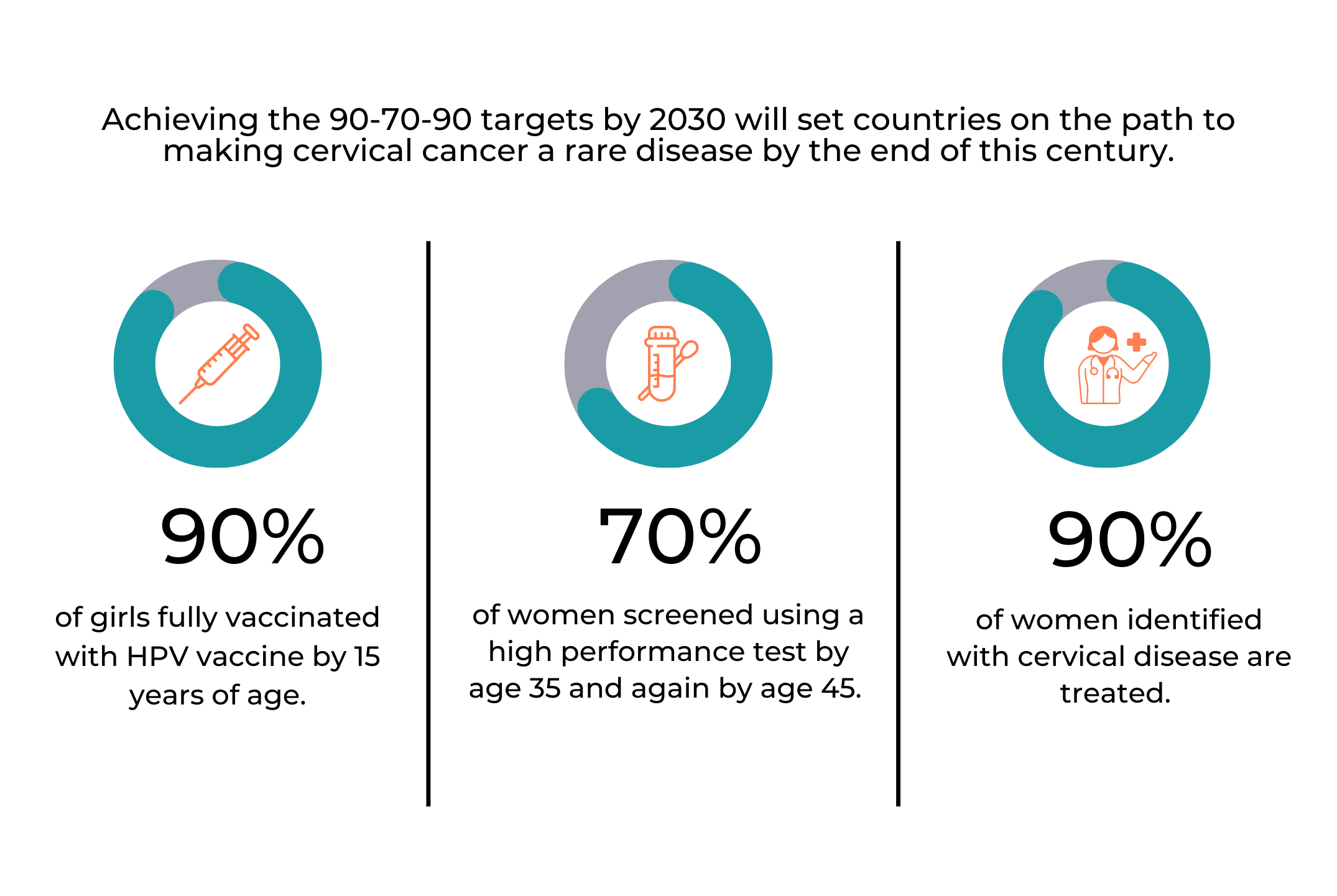
The main goal is to reduce cervical cancer to less than 4 cases per 100,000 women. To achieve this, the WHO recommends the 90–70–90 targets:
- 90% of girls should get the HPV vaccination by the age of 15.
- 70% of women should be screened with a high-performance test (HPV DNA test) by age 35 & again by age 45.
- 90% of women with cervical precancer or cancer should receive appropriate treatment and care.
How far is Malaysia from the 90-70-90 goals?
HPV Vaccination
Cervical Screening
Despite advancements in HPV vaccination, fewer than 5% of eligible women in Malaysia have been screened with the WHO-recommended HPV test. This low uptake is a critical barrier to cervical cancer prevention, driven by lack of awareness about the effective HPV DNA test, cultural stigma and fear of traditional screening and accessibility issues for rural and underserved communities. Additionally, the COVID-19 pandemic further disrupted routine screening services, setting back progress even further.
To address these challenges, Program ROSE not only screens but more importantly, is an End-To-End programme that also links all cases detected to follow-up care at nearest hospitals or clinics. Program ROSE focuses to close the gaps and ensure no woman slips through the cracks. Established in 2019, ROSE introduced Malaysia’s first self-sampling HPV test, among the first in the region, to empower women to take charge of their health with privacy and dignity. Through its extensive education and community outreach programmes, Program ROSE has reached over 1.7 million people across urban and rural Malaysia, breaking stigma and increasing awareness about HPV and cervical cancer prevention.
The Foundation works closely with the Ministry of Health Malaysia, healthcare providers, industry, and local organisations to ensure women from all walks of life can access screening, care and accurate information. By combining technology, community engagement and education, ROSE Foundation is transforming how women experience preventive healthcare and advancing Malaysia’s journey towards cervical cancer elimination.
Treatment
In Malaysia, there remains a critical gap in ensuring that women diagnosed with cervical disease particularly those who are detected with high-risk HPV receive timely and appropriate treatment. Many women are still lost to follow-up due to systemic challenges such as fragmented referral systems, limited access to specialized care like colposcopy, and a lack of awareness or fear of further procedures. Program ROSE is actively working to close this gap by offering a more accessible, women-centred approach to screening.
Through our integrated digital platforms, we ensure that women who are detected with HPV are promptly contacted and navigated through the healthcare system for appropriate follow-up. Additionally, we are also working with the Ministry of Health (MOH) to strengthen the continuum of care, including expanding training for healthcare providers in colposcopy and cervical disease management. These efforts are aligned with Malaysia’s commitment to the World Health Organization’s global strategy to eliminate cervical cancer and represent a crucial step toward building a more responsive, efficient, and equitable screening and treatment ecosystem.
Now is the time to act.