
Self-sampling is a clinically validated method for cervical cancer screening that detects high-risk human papillomavirus (HPV), the primary cause of cervical cancer. It is safe, accurate, and comparable in effectiveness to clinician-collected samples.
Through Program ROSE, self-sampling is offered to improve access to screening, particularly for women who may face barriers to clinic-based tests. The procedure is straightforward, minimally invasive, and can be completed in a few minutes by following the instructions provided.
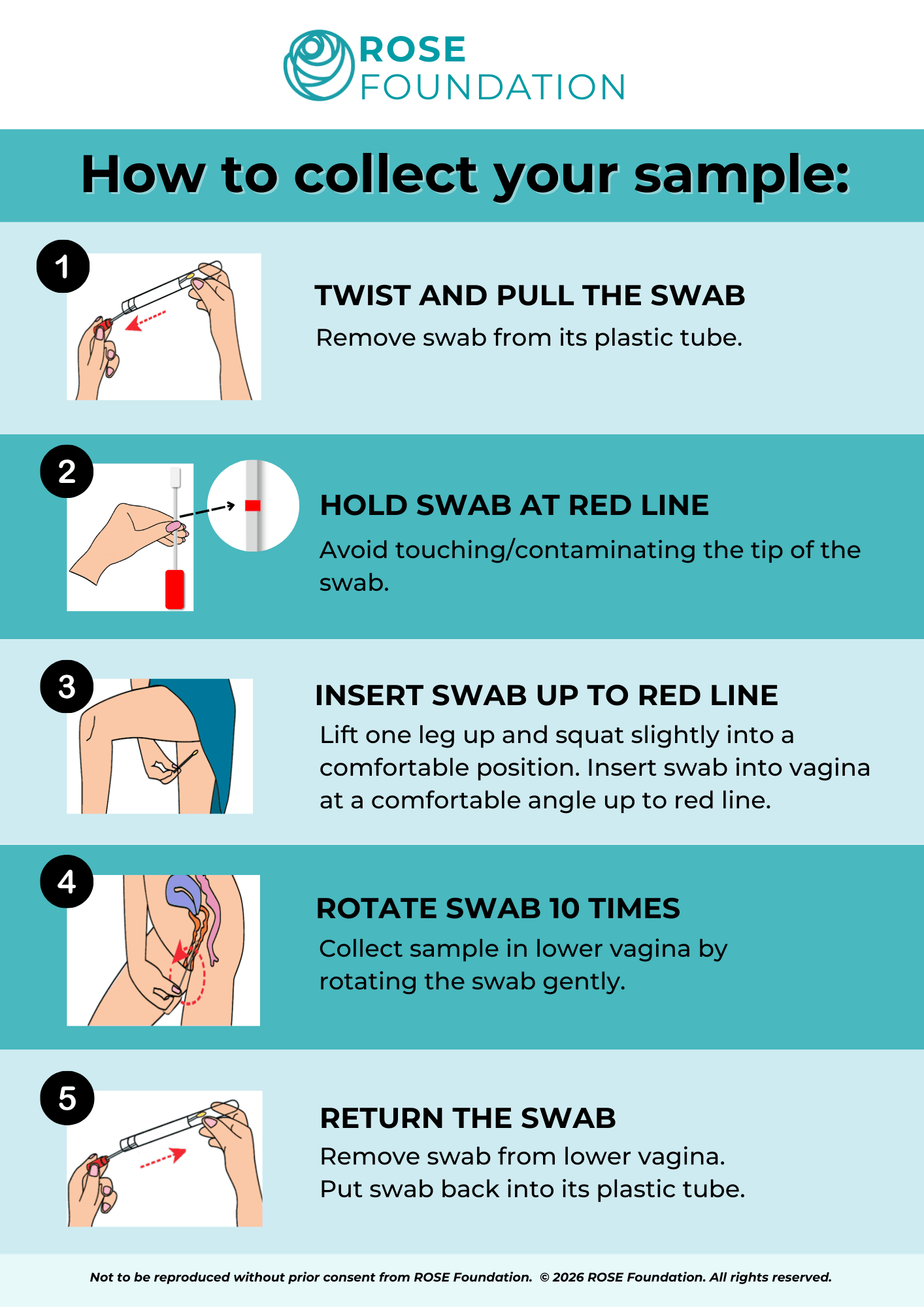
This guide outlines the correct steps for self-sampling to ensure sample quality and reliable results. Proper collection is essential for accurate screening and timely follow-up care when required.
Frequently Asked Questions
Rotating the swab fewer than 10 times may result in insufficient sample collected which may cause an inconclusive test result.
Unfortunately, no. The test must be performed at the screening site and the swab must be returned on the same day.
It’s completely normal to feel a bit anxious. However, only you can perform the self-sampling unless a healthcare professional, such as a doctor or nurse is present to assist. You can also visit the nearest Klinik Kesihatan to have the test done by a medical professional.
Yes, the test is still valid. A small amount of blood on the swab can occur and is generally not a cause for concern. Please rest assured that this does not affect the accuracy of your test results.
If the swab is accidentally dropped or the tip is touched, please inform a ROSE staff or assigned personnel immediately. A replacement swab will be provided to ensure the accuracy and safety of your test.
The self-sampling process usually takes just a few minutes. The overall visit, including registration and instructions, may take about 15–30 minutes.
No, the self-sampling test is designed to be simple and minimally uncomfortable. Most participants report little to no pain during the procedure.
It is recommended to avoid taking the test if you are having heavy menstruation, as blood may interfere with the sample. Please choose a time when you are not menstruating or when you’re at the end of your menstruation.